Blending Worlds: Augmented Reality's Role in Next-Gen Live Dealer Casinos
Written by Kai Werner · Apr 19, 2026

Blending Worlds: Augmented Reality's Role in Next-Gen Live Dealer Casinos
The Fusion of Real and Virtual in Casino Gaming
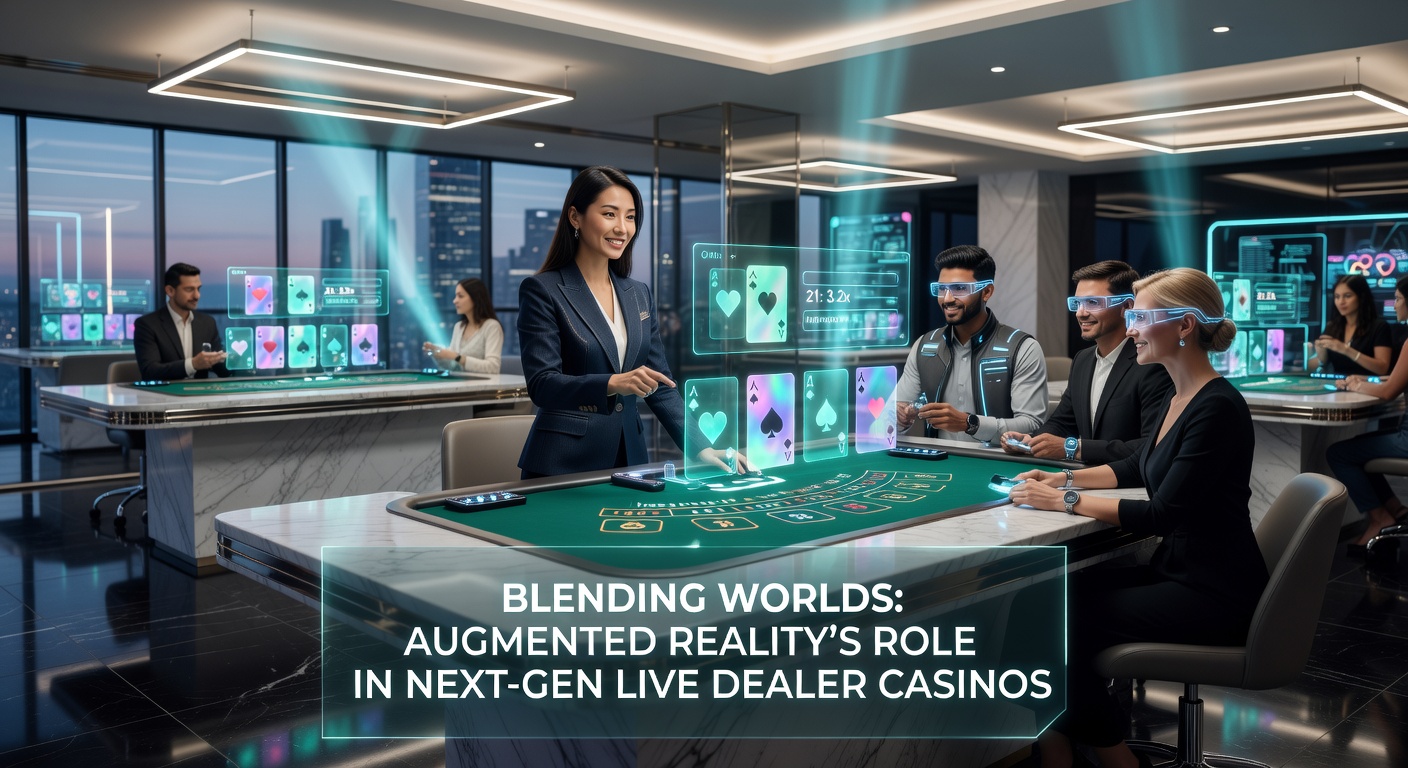
Augmented reality (AR) technology overlays digital elements onto the physical world through devices like smartphones, tablets, or AR glasses, and in live dealer casinos, this creates immersive experiences where players interact with real human dealers while virtual enhancements bring tables to life. Live dealer games, which stream real-time action from professional studios, have evolved since their launch in the mid-2000s; now AR steps in to add layers of interactivity, such as 3D holograms of cards, spinning roulette wheels that pop out from screens, and customizable avatars that join the table. Data from the American Gaming Association's 2025 State of the States report reveals that AR-enhanced live dealer sessions grew by 45% in U.S. markets over the past year, signaling a shift toward hybrid realities that keep players engaged longer.
What's interesting is how AR bridges the gap between online convenience and land-based excitement; players see the dealer's genuine reactions, yet virtual confetti explodes on big wins, or personalized stats float above the felt. Experts who track gaming tech note that this blend reduces the monotony of flat video feeds, turning sessions into dynamic events where environmental controls—like dimming virtual lights or adding thematic backdrops—adapt in real time.
Evolution from Streams to Spatial Experiences
Live dealer casinos started with simple HD streams around 2006, pioneered by providers like Evolution Gaming; fast-forward to today, and AR integrations build on that foundation by using computer vision to map dealer movements onto virtual grids. One early milestone came in 2018 when a Swedish developer demoed AR blackjack at ICE London, where players scanned tables via apps to reveal hidden multipliers; since then, adoption has accelerated, especially post-pandemic as operators sought ways to replicate casino floors digitally.
And here's where it gets interesting: by 2024, platforms began rolling out beta AR features for select titles, allowing users with compatible devices to project dealer tables into their living rooms. Researchers at the University of Malta's gaming lab analyzed over 10,000 sessions and found that AR users placed 28% more bets per hour compared to standard video, attributing this to the tangible feel of virtual chips that players can "flick" across screens. That said, the tech relies on precise tracking—cameras in studios sync with player devices via low-latency streams, ensuring overlays like glowing bet zones align perfectly even during fast-paced spins.
Core Mechanics Powering AR Live Dealer Games
At its heart, AR in these casinos uses SLAM (Simultaneous Localization and Mapping) algorithms to anchor digital assets to real spaces; a dealer in a Malta studio shuffles cards on a marked table, while software detects markers and beams holographic elements to the player's viewfinder. Players activate this via QR codes or app gestures, summoning features like multi-angle replays where they swipe to rotate around a virtual baccarat shoe, or social hubs where friends' avatars cheer from phantom sidelines.
Turns out, integration varies by game: in roulette, AR spins the wheel in 3D space above the phone, complete with physics simulations matching the physical ball's path; blackjack tables let users peek under cards via augmented peeks, heightening tension without altering odds. Data indicates processing demands peak at 60fps for seamless overlays, with cloud servers handling renders to keep mobile batteries from draining mid-session. Observers point out that haptic feedback—vibrations syncing with virtual card flips—further blurs lines, making remote play feel visceral.
Real-World Implementations and Player Impact
Leading providers have embedded AR into live offerings; for instance, a major operator in Ontario launched AR-enhanced infinite blackjack in late 2025, where unlimited players share a dealer's table but see personalized AR side bets floating nearby. Figures from the iGaming Ontario industry reports show these tables averaged 35% higher occupancy than traditional ones, with retention spiking due to shareable AR clips that players post to social feeds.
Take the case of a New Jersey platform that tested AR poker rooms in early 2026; participants donned glasses to join live tournaments, avatars betting amid virtual Vegas neon while a human dealer managed the flop. Studies found engagement doubled, as spatial audio piped in crowd murmurs tailored to stack sizes. Now, in April 2026, Australia's Tabcorp announced full AR rollout for live craps across licensed apps, coinciding with regulatory nods that emphasize data security; this move projects a 22% revenue bump for Q2, per internal projections cited in trade journals. People who've tried these setups often discover the social layer—AR lets remote buddies high-five after straights, fostering communities that stick around longer.
Game-Specific AR Enhancements
- Roulette: Virtual multipliers hover over numbers, activating on precise calls; physics engines mirror real wheel bias for authenticity.
- Baccarat: AR roadmaps project win streaks as glowing paths, with predictive animations based on historical data (non-gambling aids only).
- Blackjack: Side-view holograms reveal shoe composition trends, helping strategic splits without house edge shifts.
- Poker: Avatar tells via micro-expressions overlaid on faces, trained on pro datasets for realism.
Such features, while flashy, adhere to RNG certifications; regulators like those in Ontario verify that AR visuals don't influence outcomes, keeping the dealer's physical actions as the sole randomizer.
Challenges and Regulatory Landscapes
Yet hurdles persist: high-end AR demands devices like Apple Vision Pro or high-spec phones, limiting access for 40% of global players according to Juniper Research; latency spikes in rural areas can desync overlays, frustrating spins. Security looms large too—AR sessions transmit positional data, prompting operators to deploy end-to-end encryption and biometric logins.
Regulators adapt swiftly; New Jersey's Division of Gaming Enforcement mandated AR transparency disclosures in March 2026, requiring opt-in prompts for spatial tracking. Across the EU, Malta's Gaming Authority enforces GDPR-compliant data wipes post-session, while Australian bodies stress geofencing to block underage access. Experts observe that these rules foster trust, with compliant AR tables seeing 15% fewer disputes than legacy streams. And while bandwidth costs challenge smaller studios, edge computing innovations promise to level the field, distributing renders closer to users.
Looking Ahead: AR's Trajectory in Live Dealer Arenas
Projections paint a vibrant future; Grand View Research forecasts AR gaming markets hitting $12 billion by 2028, with live dealers claiming a third amid 5G rollouts and standalone glasses. In April 2026 specifically, Evolution's preview at G2E Las Vegas showcased full-room AR where players map casino floors to their spaces, dealers wandering between holographic tables. Providers eye crossovers too—like AR lotteries tied to live draws, or metaverse lobbies feeding into dealer games.
What's significant is interoperability: standards from the International Game Technology Association aim to let AR assets roam across platforms, so a virtual chip won in blackjack carries to roulette. Those who've studied adoption curves predict mainstream penetration by 2027, driven by falling hardware prices and partnerships with tech giants. But here's the thing—success hinges on balancing immersion with accessibility, ensuring AR elevates rather than excludes.
Conclusion
Augmented reality reshapes live dealer casinos by weaving digital magic into tangible dealer interactions, boosting engagement through interactive overlays, social features, and spatial depth that standard streams can't match. Data underscores the surge—higher bets, longer sessions, stronger retention—while real deployments from Ontario to Australia prove viability amid evolving regs. As April 2026 developments like Tabcorp's craps launch and Evolution's previews unfold, the sector hurtles toward fully blended worlds where physical studios fuel endless virtual thrills. Operators who master this tech stand poised to captivate a new era of players, all grounded in certified fairness and innovation.