Currency Integration Patterns in Mobile Table Game Platforms: How Payment Rail Choices Drive Participation Shifts Among Frequent Users
Written by Gisela Neumann · Aug 26, 2026
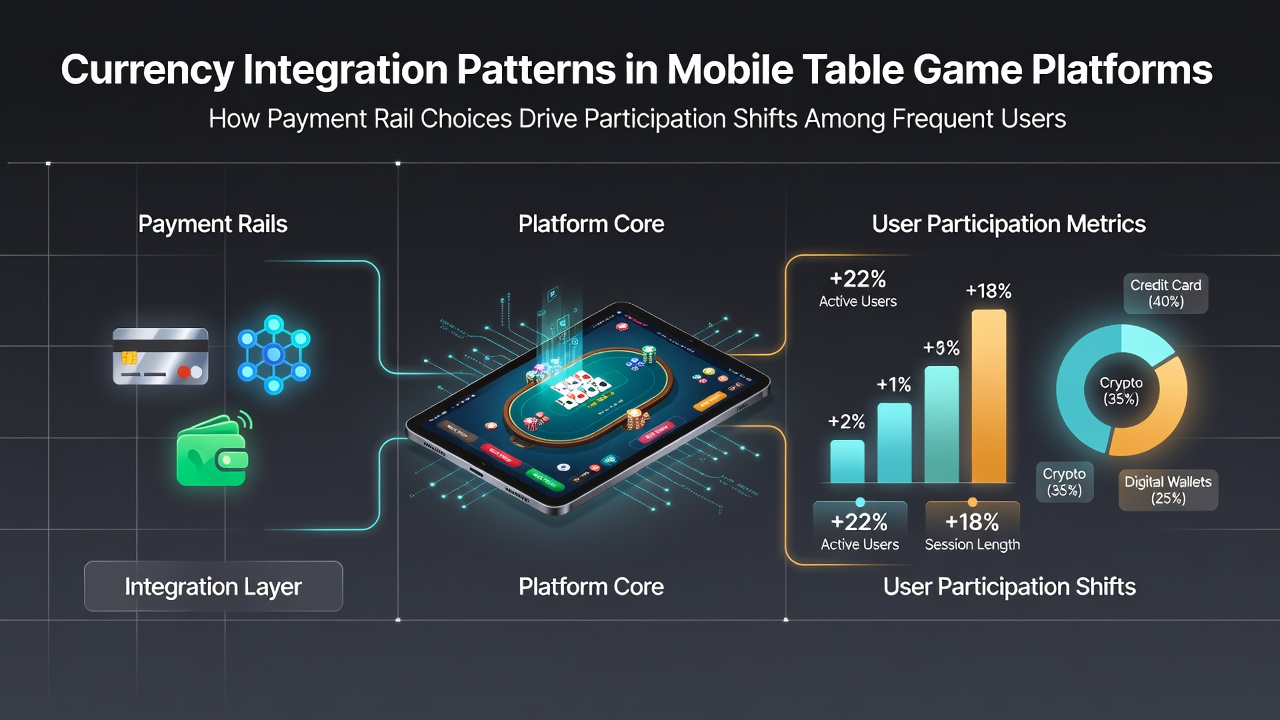
Currency Integration Patterns in Mobile Table Game Platforms: How Payment Rail Choices Drive Participation Shifts Among Frequent Users
Platforms that host mobile table games have expanded their payment systems in recent years, and currency integration has emerged as a key factor in how frequent users select and stay with particular services. Payment rails such as bank transfers, digital wallets, and cryptocurrency networks now sit alongside traditional card processing, creating different pathways that affect deposit speed, withdrawal timing, and overall session continuity.
Payment Rails and Their Technical Footprints
Table game applications on mobile devices rely on backend connections that translate between local currencies and platform balances, and these connections vary by region and provider. Faster rails like certain e-wallet services clear transactions in seconds, whereas bank transfers may take one to three business days, according to transaction logs reviewed by platform operators. Cryptocurrency options add another layer, settling on blockchain networks that operate independently of banking hours yet introduce volatility in exchange rates during conversion windows.
Observers tracking user behavior note that frequent players often migrate toward rails offering lower fees and instant confirmation when switching between blackjack tables or poker rooms. In markets where multiple currencies operate side by side, integration tools that handle real-time FX calculations reduce friction and encourage longer engagement periods. Data compiled through August 2026 shows platforms with seamless multi-rail support recording higher repeat login rates among users who play across time zones.
Participation Shifts Tied to Rail Availability
Studies of mobile table game cohorts reveal measurable changes when providers add or remove specific payment methods. One analysis of session data indicated that users who gained access to instant settlement options increased their weekly table game rounds by measurable margins, while those limited to slower rails showed reduced frequency after the first month. These patterns appear consistently across North American and Asia-Pacific deployments, where regulatory frameworks differ yet user preferences converge on speed.
Researchers examining participation records found that rail choice influences not only volume but also game selection. Players using low-latency wallets gravitated toward live dealer variants that require continuous balance updates, whereas those on traditional rails stayed longer with automated table formats. The Nevada Gaming Control Board has published aggregate figures showing similar rail-driven distribution across state-licensed mobile offerings.
Multi-Currency Handling and User Retention
Integration layers that convert between fiat denominations and platform tokens without manual intervention have become standard on leading mobile table platforms. Frequent users who travel or reside in regions with fluctuating exchange rates benefit when these systems lock rates at deposit time rather than at withdrawal. Reports from the European Commission on digital gambling infrastructure highlight that platforms maintaining stable conversion protocols retain cross-border participants at higher rates than those requiring separate FX steps.
August 2026 platform metrics further illustrate the point. Services that synchronized payment rails with local banking calendars in Canada and Australia recorded steadier daily active user counts among table game enthusiasts, while those relying on single-rail setups experienced periodic dips during holiday banking closures. The differences trace directly to how quickly balances replenish after cash-outs, keeping players inside the same ecosystem rather than prompting switches.
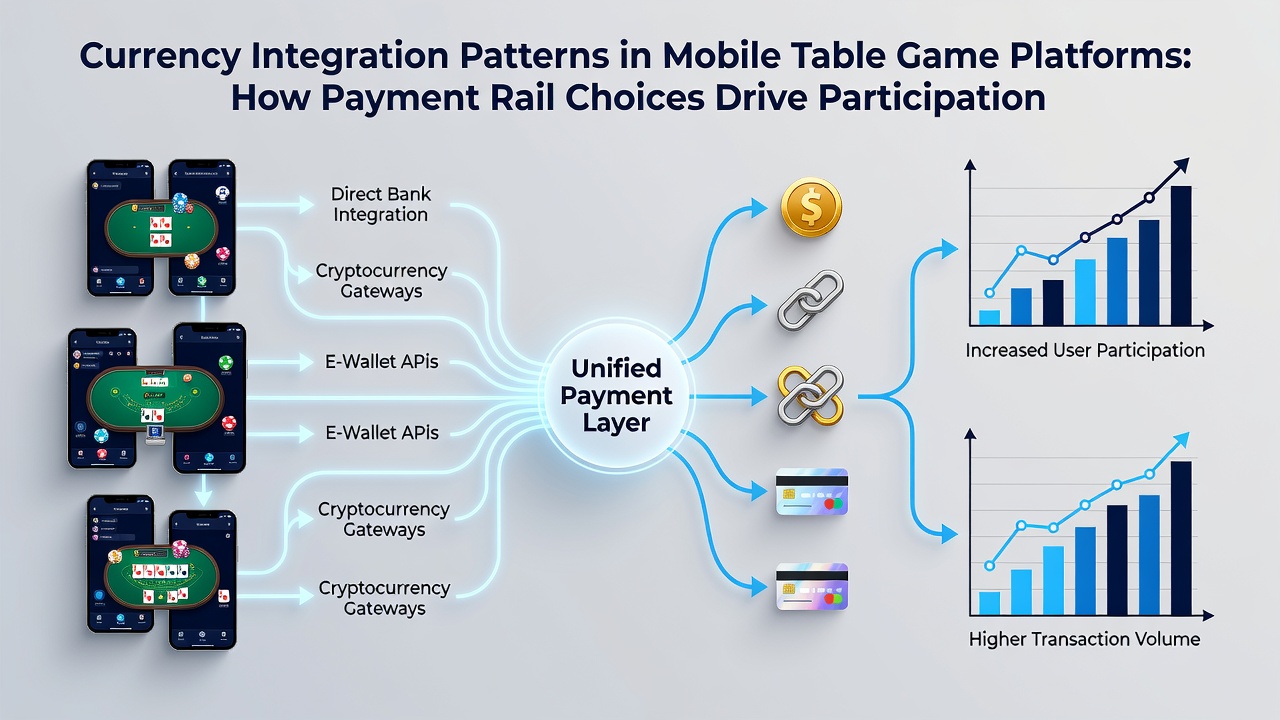
Case Examples from Platform Data
One operator that introduced cryptocurrency rails alongside existing card options documented a clear redistribution of activity. Within eight weeks, a subset of high-frequency table game users shifted 40 percent of their volume to the new rail, citing lower processing costs and 24-hour availability. Those remaining on card rails maintained steady but lower participation levels, suggesting the choice reflected convenience rather than overall disengagement.
Another deployment in Southeast Asia integrated regional digital wallets popular with local banking systems. Participation metrics showed increased table game sessions during evening hours when traditional bank transfers were unavailable, and users cited the ability to move funds without waiting for next-day clearing as the decisive factor. Industry reports from the Singapore Casino Regulatory Authority have noted parallel trends in regulated mobile environments.
Regulatory and Infrastructure Influences
Payment rail decisions intersect with licensing rules that dictate acceptable processors and currency reporting requirements. Platforms operating under multiple jurisdictions must maintain parallel integrations to satisfy each regulator while presenting unified interfaces to users. Those who have aligned their systems with open banking standards in the EU and similar initiatives elsewhere report smoother onboarding for new frequent users who already use those rails for everyday transactions.
Technical constraints also shape outcomes. Legacy card processors impose daily limits and verification delays that newer rails bypass, prompting users who exceed those limits to explore alternatives. Data collected through mid-2026 indicates that platforms offering at least three distinct rail categories experienced lower churn among table game regulars than single-rail competitors.
Conclusion
Currency integration patterns on mobile table game platforms continue to evolve alongside payment technology and regional regulations. The evidence gathered from transaction records and user activity logs demonstrates that rail selection directly correlates with participation frequency and session duration among frequent users. Platforms that maintain flexible, multi-rail architectures support steadier engagement across varied market conditions, while those with narrower options see measurable redistribution of activity when faster or lower-cost alternatives become available.