How Algorithmic Personalization Shapes Game Selection Patterns Among Frequent Digital Casino Visitors
Written by Theo Koch · May 22, 2026

How Algorithmic Personalization Shapes Game Selection Patterns Among Frequent Digital Casino Visitors
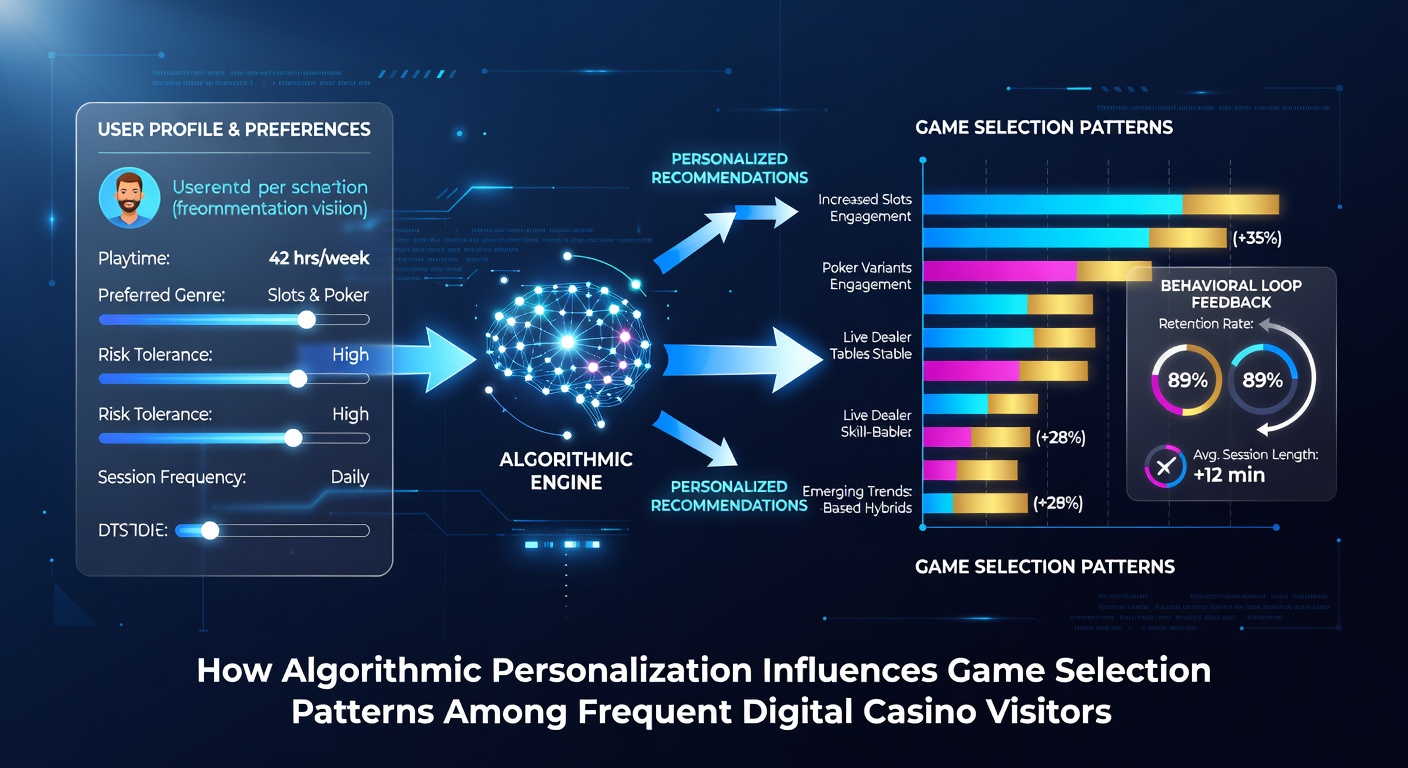
Digital casino platforms have refined their recommendation engines over the past several years, and these systems now guide frequent visitors toward specific titles based on detailed behavioral data. Operators collect information on session length, bet sizes, time of day, and preferred game mechanics, then feed those signals into machine-learning models that predict which slots, table games, or live dealer experiences will keep a player engaged longest. Observers note that the result is a noticeable narrowing of choices for many regular users, who increasingly encounter the same handful of recommendations each time they log in.
Research indicates that personalization algorithms rely on collaborative filtering techniques similar to those used by streaming services, yet they incorporate gambling-specific metrics such as volatility tolerance and bonus-round completion rates. When a player repeatedly selects high-volatility slots after receiving a deposit match, the system begins to prioritize similar titles and de-emphasizes lower-volatility options or table games the visitor once tried. Data from industry analytics firms shows this reinforcement loop strengthens after roughly five to seven sessions, at which point the platform’s suggested carousel may feature only three or four titles that align closely with the established profile.
Data Collection and Model Training Practices
Platforms gather telemetry from every click, spin, and decision a registered user makes while logged in, and they combine that information with device type, geographic location, and payment history to build multidimensional player segments. Engineers update these models weekly using recent play patterns, which allows recommendations to shift quickly when a visitor experiments with a new genre. Those who have examined anonymized datasets report that the models also factor in external signals such as promotional timing and competitor game launches, producing suggestions that feel both personally relevant and commercially advantageous for the operator.
By May 2026 several major platforms had integrated real-time A/B testing directly into their recommendation pipelines, enabling them to measure how different suggestion orders affect session length and deposit frequency within the same day. Regulators in multiple jurisdictions have begun requesting summary reports on these tests to ensure the systems do not disproportionately steer players toward higher-house-edge titles without clear disclosure.
Documented Shifts in Game Selection Behavior
Longitudinal studies of frequent visitors reveal that exposure to personalized carousels correlates with reduced exploration of the full game library. One analysis of clickstream data from a mid-sized European operator found that users who received tailored suggestions explored 37 percent fewer unique titles over a three-month period compared with a control group shown randomized lists. The same study recorded a corresponding rise in repeat plays of algorithm-favored games, particularly those featuring familiar mechanics or branded content.
Researchers have observed that the effect appears stronger among players who visit daily or multiple times per week. These individuals often develop a smaller set of go-to games because the interface makes those options immediately visible while burying alternatives behind additional clicks or menu layers. Industry reports note that such patterns can persist even after a player receives a new bonus or participates in a tournament, because the underlying profile remains anchored to prior behavior.
Regional Regulatory Responses and Industry Standards
Authorities in Ontario and several Australian states have introduced guidelines requiring operators to disclose when game order is determined by algorithmic ranking rather than alphabetical or popularity-based lists. The Australian Gambling Research Centre published a 2025 working paper that examined how default recommendation order influences wager distribution across player cohorts, and the findings prompted renewed discussion about transparency obligations. In parallel, the European Gaming and Betting Association released best-practice recommendations encouraging member companies to offer an “explore mode” that disables personalization for a single session, giving users a chance to browse without algorithmic filtering.
Operators have responded by adding toggles that let frequent visitors temporarily reset their recommendation profile or view a broader catalog. Early adoption metrics released in spring 2026 indicated modest uptake, with roughly 12 percent of daily active users activating the feature at least once per month. Those who have reviewed platform dashboards report that the reset option tends to increase short-term variety but does not permanently alter the underlying model’s predictions once the user returns to normal browsing.
Future Developments and Measurement Challenges
Engineers continue to experiment with reinforcement-learning approaches that optimize for longer-term retention metrics instead of immediate session length. Early tests suggest these models can surface games a player has not yet tried but is statistically likely to enjoy, potentially expanding rather than narrowing selection patterns. Measurement remains difficult, however, because platforms treat detailed model architecture and feature weights as proprietary information, limiting independent verification of claimed effects on player behavior.
Conclusion
Algorithmic personalization has become a standard feature of digital casino interfaces, and its influence on the choices made by frequent visitors is measurable through both internal analytics and external research. While operators refine these systems to balance commercial goals with regulatory expectations, players encounter a progressively curated set of options that reflect their established habits. Continued monitoring by researchers and oversight bodies will determine whether emerging transparency tools and alternative discovery modes can restore broader exploration without diminishing the engagement benefits personalization currently delivers.