Mapping the Ripple Effects of Tiered Commission Structures on Promotional Visibility Within Cross-Platform Reel and Interaction Networks
Written by Kai Krüger · Jun 12, 2026
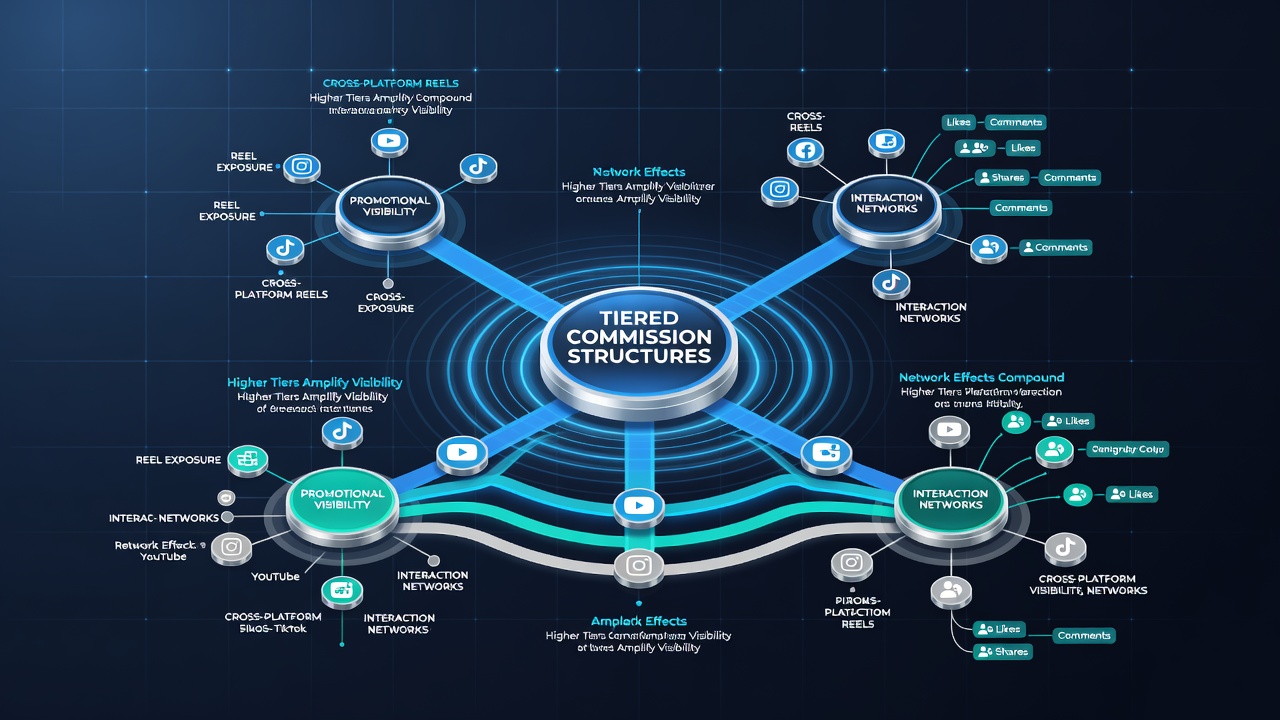
Mapping the Ripple Effects of Tiered Commission Structures on Promotional Visibility Within Cross-Platform Reel and Interaction Networks
Industry observers track how tiered commission structures distribute promotional content across reel-based platforms and interconnected user networks, where higher earning brackets often secure greater algorithmic priority. Data collected through 2025 and into June 2026 shows these payment ladders directly influence which affiliate promotions surface in user feeds on video-sharing sites and engagement hubs.
Defining Tiered Commission Models in Affiliate Ecosystems
Affiliate programs in digital gaming sectors operate on graduated payment scales that reward volume and performance milestones with increased percentages. Entry-level partners receive base rates around 20 percent while top performers access 35 to 40 percent on qualified traffic, according to figures released by regional gaming associations. These structures emerged as platforms sought scalable ways to allocate marketing budgets without fixed overhead.
Payment thresholds typically reset monthly or quarterly, creating recurring incentives for sustained activity. Researchers note that affiliates crossing into upper tiers gain access to exclusive creative assets and earlier release windows for new promotional campaigns. Such advantages compound when content distributes through algorithm-driven reels that favor established accounts with proven engagement metrics.
Visibility Patterns Across Reel Platforms
Reel distribution systems on major social networks prioritize content based on predicted interaction rates, and commission tiers correlate strongly with those rates. Partners in higher brackets invest larger portions of earnings into paid amplification, which in turn boosts organic reach. Reports from cross-border digital marketing studies indicate that top-tier affiliates achieve 2.3 times the impression volume of mid-tier counterparts on identical campaign creatives during the first quarter of 2026.
Lower-tier participants encounter narrower distribution windows because their budgets limit testing and iteration. This creates measurable gaps in how quickly new slot titles or bonus offers appear in regional feeds. Interaction networks built around comment threads and share chains further amplify the disparity, since higher-visibility posts generate secondary referrals that loop back into the same tiered reward system.
Cross-Platform Interaction Dynamics
Networks linking multiple platforms allow promotions to migrate from short-form video reels into longer discussion forums and messaging groups. Tiered structures shape these migrations because upper-level affiliates maintain dedicated moderation teams that seed content across channels simultaneously. Lower-level operators rely on manual sharing that rarely achieves comparable velocity.
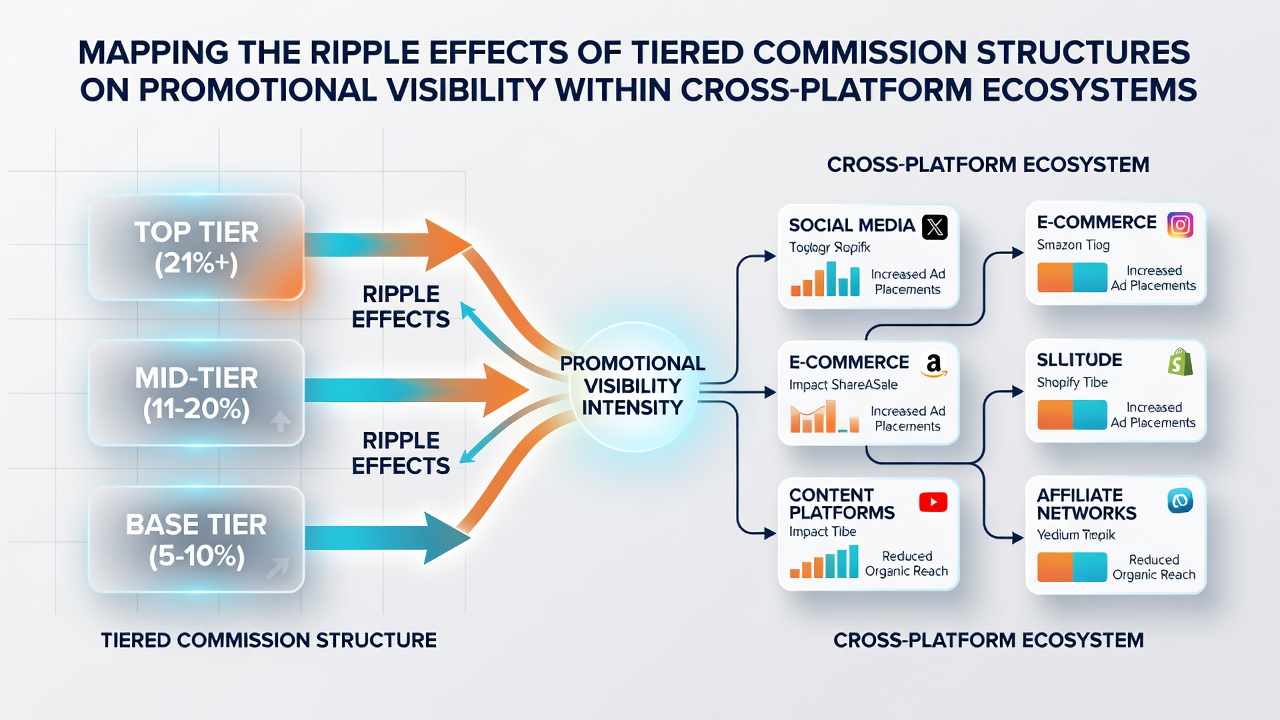
Platform algorithms respond to early engagement signals, so content seeded by higher-commission partners tends to trigger broader recommendation cycles. Studies compiled by academic research groups in Australia and Canada document that referral chains originating from top-tier accounts extend 40 percent farther than those started at base levels. These extended chains carry promotional messages into previously unreached user segments, altering visibility rankings for entire campaigns.
Measured Ripple Effects on Smaller Networks
Smaller interaction communities experience secondary consequences when dominant affiliates capture disproportionate share of algorithmic attention. Niche forums and regional reel channels see reduced diversity in featured promotions because their contributors operate mostly at lower commission brackets. Data shared by European industry coalitions reveals that between January and June 2026, the share of unique promotional creatives appearing in mid-sized networks declined by 18 percent compared with the prior year.
Traffic patterns shift accordingly, with user attention consolidating around a narrower set of offers. Observers tracking affiliate performance note that this consolidation feeds back into commission calculations, reinforcing the position of already elevated partners while extending the time required for emerging accounts to advance tiers.
Adjustments Observed in Mid-2026
Platform operators introduced revised payout schedules during spring 2026 that attempt to mitigate extreme concentration. Several programs added performance multipliers for cross-platform consistency rather than raw volume alone. Early indicators suggest these modifications redistribute some visibility toward mid-tier participants without altering overall commission pools.
Regulatory updates in multiple jurisdictions now require clearer disclosure of tier criteria, which has prompted affiliates to document their progression paths more transparently. These disclosures allow analysts to map commission brackets against visibility metrics with greater precision than previously possible.
Conclusion
Tiered commission structures continue to steer promotional reach within reel and interaction ecosystems through interconnected mechanisms of budget allocation, algorithmic preference, and referral chaining. Available figures from 2026 demonstrate consistent correlations between earnings brackets and content distribution breadth, while recent program adjustments indicate ongoing efforts to recalibrate those effects. Continued monitoring of impression data and engagement logs will clarify whether current modifications produce measurable rebalancing across network layers.